Cultural Event 2016
Date
Time
About the Event
Written by: Robert SNELLGROVE (FS2012-13, University of Oxford)
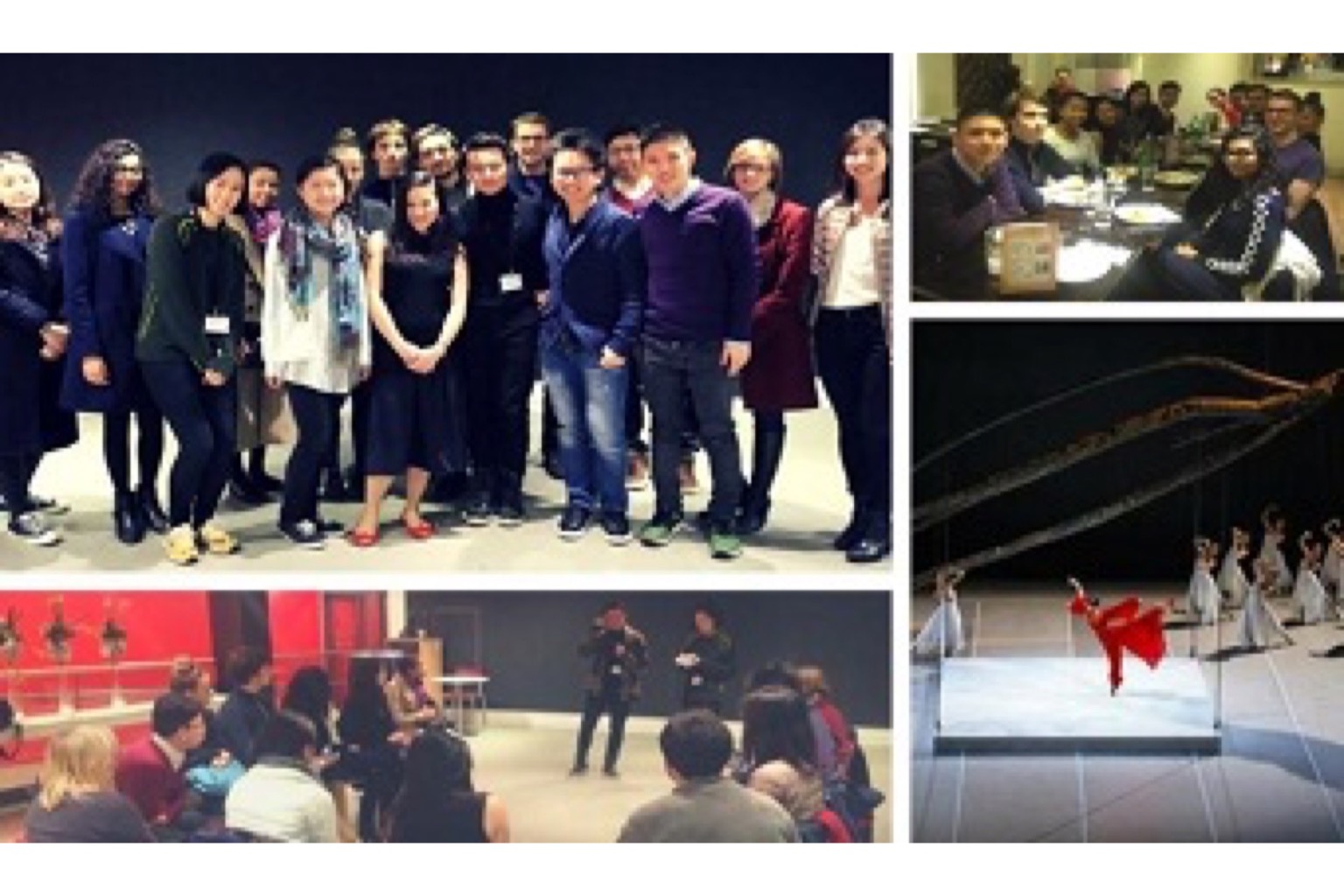
On 3 December 2016, 14 Fung Scholars attended a performance by the National Ballet of China of the Peony Pavilion, and then went for dinner together. With this event, we aimed to develop scholars’ understanding of Chinese culture and to facilitate connections between Fung Scholars. The performance of the Peony Pavilion gave the Fung Scholars an opportunity to learn about a classic story from Chinese literature and to learn about contemporary dance and culture in China. The dinner after the show was a chance to build on the connections made at the Welcome Drinks in October, and to welcome new Fung Scholars to the group.
The production was two hours in length, with a 20 minute interval. The ballet tells the story of Du Liniang, the daughter of an important official. She falls into a daydream, where she meets the scholar Liu Mengmei. She wakes up from her dream, confused as to what is real and what is an illusion. But Liu Mengmei is real, and has also been dreaming about Du Liniang. Liniang passes away, and faces the judge of the underworld. Moved by Liniang’s story, he releases her back into the world of mortals so she can be reunited with her lover. The show was very moving, and was an amazing visual spectacle.
Thanks to the help of the Senior Programming Manager at the theatre, we organised a Q&A session with the production’s choreographer, Fei Bo. We met him straight after the show in a small function room at the theatre, and he took our questions about all aspects of the production for about 40 minutes. Among many other topics, he talked to us about:
– The process of translating a story into a ballet
– The different response the show received from different audiences
– The significance and symbolism of the distinctive colours that were used in the performance that changed throughout the show.
– Some of his experiences that had informed how he developed the choreography
– The significance of the story to different people and in Chinese culture
After the show, we went to a restaurant close to the theatre. By coincidence, this was the restaurant where a number of the dancers went to eat after the show, so some of the members of our group were able to speak with some of the dancers. We were joined at the dinner by two other scholars who hadn’t been able to attend the ballet. The dinner was an opportunity for scholars to get to know each other further, to discuss what they had seen during the show, and for new scholars to be introduced to the group. The group was a mixture of current students and scholars who are now working.
We had a good response from the attendees about the show and the discussion with the choreographer, and there was lively conversation at the dinner. We hope to organise further cultural events like this in future.’
After the show, we went to a restaurant close to the theatre. By coincidence, this was the restaurant where a number of the dancers went to eat after the show, so some of the members of our group were able to speak with some of the dancers. We were joined at the dinner by two other scholars who hadn’t been able to attend the ballet. The dinner was an opportunity for scholars to get to know each other further, to discuss what they had seen during the show, and for new scholars to be introduced to the group. The group was a mixture of current students and scholars who are now working.
We had a good response from the attendees about the show and the discussion with the choreographer, and there was lively conversation at the dinner. We hope to organise further cultural events like this in future.
Choreographer Fei Bo speaks to the London Scholars with the help of a translator.
The group with Fei Bo (centre).